




Under Article 440 of the Turkish Code of Obligations, an employment contract terminates automatically on the death of the employee.
Employers may make payments described as a 'death benefit' to the legal heirs of an employee who dies (the Income Tax Law refers to the 'worker' of the Code of Obligations and the Labour Law, used there in a broad sense, as an 'employee'. The term 'worker' in the Income Tax Law is used only for those who work physically or whose physical activity exceeds their intellectual activity — see, for example, Article 23/9). These payments may be made in cash to the employee's legal heirs, or may take the form of settling the deceased employee's loan or credit card debts to banks.
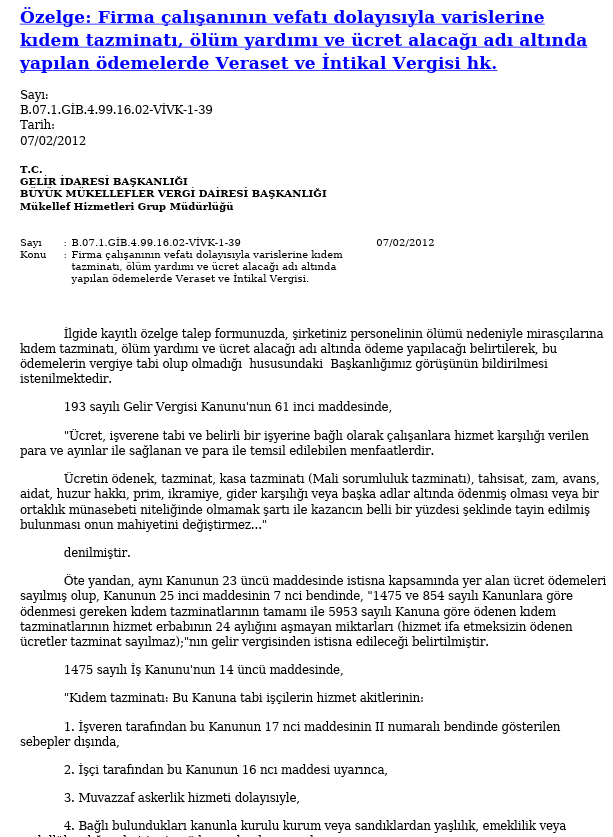
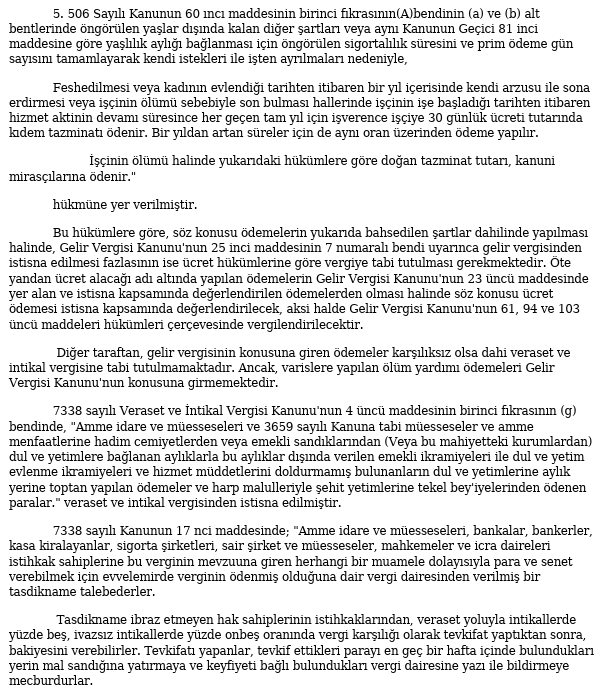
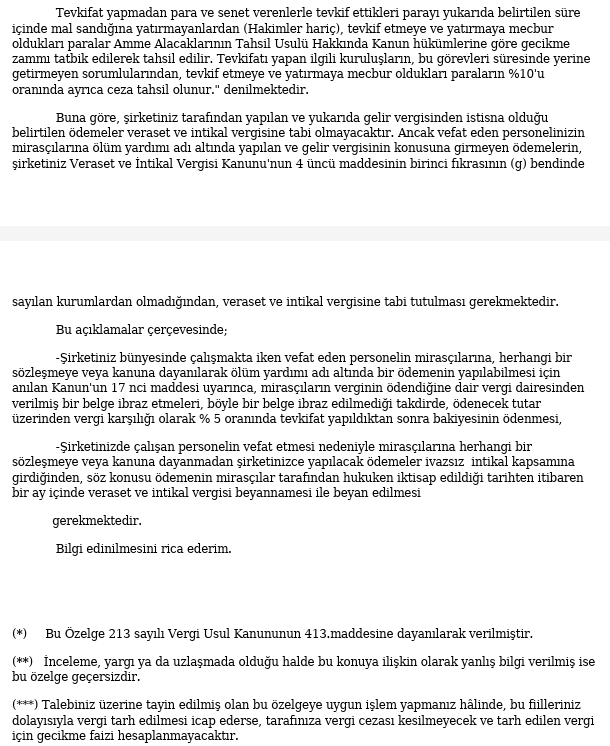
Paragraph 1 of Article 25 of Income Tax Law No. 193, which governs exemptions for compensation and benefits, provides that compensation and benefits given on account of death are exempt. Under that provision, compensation given and benefits made to an employee on the death of their mother, father, spouse or child must be exempt from income tax. Where the employee themselves dies, however, benefits made and compensation paid to the heirs fall outside the scope of the Income Tax Law. (The private ruling No. B.07.1.GİB.4.99.16.02-VİVK-1-39 of 07.02.2012, issued by the Large Taxpayers Tax Office Directorate, contains an assessment from the inheritance and gift tax perspective.)
Many businesses, however, relying on Article 61/3-2 of the Income Tax Law — 'money and other benefits in kind given in return for services previously rendered or to be rendered in the future' — treat these payments as salary and record them as a general expense (also applying withholding).
In fact, benefits made and compensation paid to heirs on the death of the employee themselves cannot be taken into account as a deduction in determining net corporate income under Article 40/1 of the Income Tax Law, as general expenses relating to the maintenance of commercial income.
That said, Article 440 of Turkish Code of Obligations No. 6098 provides that "The contract terminates automatically on the death of the employee. The employer is obliged to make a payment of one month's salary, calculated from the date of death, to the employee's surviving spouse and minor children, or failing them to the persons the employee was obliged to support; and of two months' salary where the employment relationship lasted more than five years." This payment, known in practice as "Death Compensation" and made under a statutory obligation taking into account the length of the deceased employee's service, is therefore (provided it has been paid) an expense incurred to maintain commercial income, and may be taken into account in determining net income without being treated as salary.
It follows that any benefit provided to heirs on the death of an employee should not be accepted as an expense to the extent that it exceeds the amount set out in Article 440 of Law No. 6098.
Was this helpful?